Webpage under construction - Test-Service
Webpage under construction - Test-Service
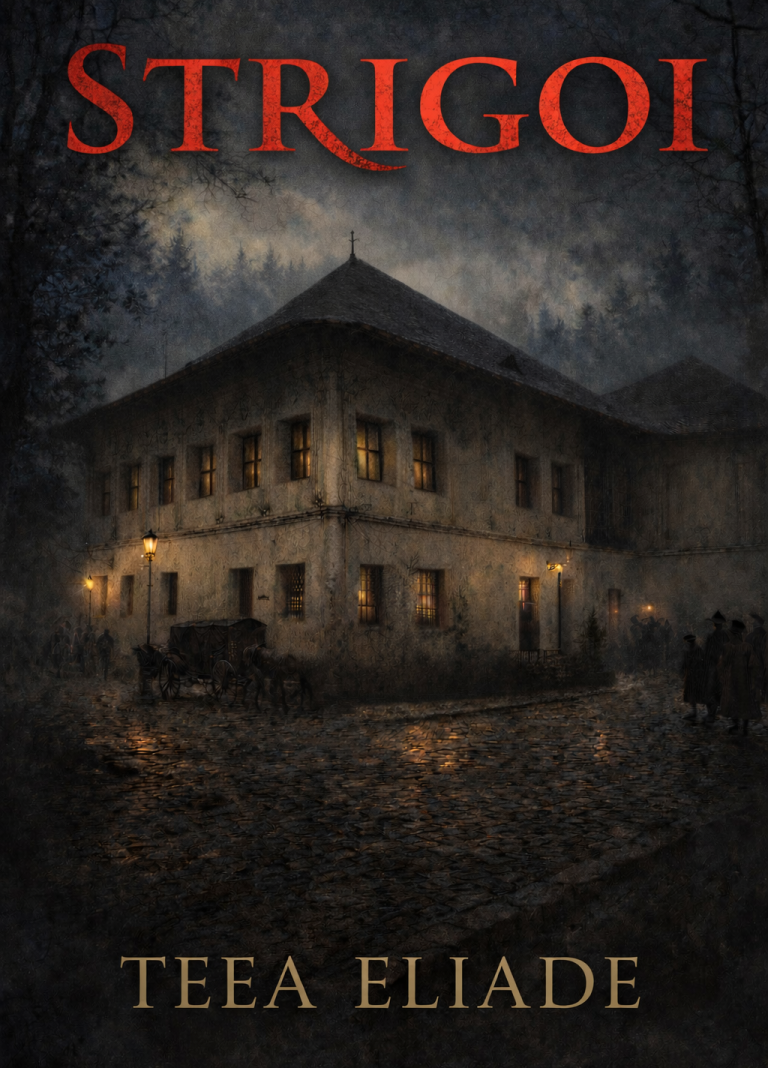
In Romanian folklore, a Strigoi is not a monster. It is a being that occupies an unstable threshold: between life and death, human and non human , memory and ritual. Unlike the vampire, the Strigoi is not defined by blood or seduction, but by return — the persistence of something that should have ended, yet did not.
Strigoi engages this concept not as folklore, but as a philosophical problem.
The novella is structured as a collection of documents: journals, archaeological records, translations, inscriptions. These materials span more than a century and appear, at first, to invite rational reconstruction. Yet the more carefully they are examined, the less stable they become. Dates fracture, pages vanish, languages blur, and interpretation itself turns unreliable.
Rather than narrating a single supernatural event, the text explores how belief, repetition, and reenactment transform perception. The Strigoi is never presented as a confirmed entity. Instead, it emerges through patterns: cyclical rituals, subterranean spaces, animal metamorphoses, solstitial timings, and the persistent return to sealed places beneath human habitation.
A central concern of the novella is the tension between knowledge and participation. Archaeology, translation, and historical inquiry are shown not as neutral acts, but as processes that draw the observer inward. To study the Strigoi is to risk imitating it. To document is to repeat. To explain is to become involved.
T. Eliade deliberately avoids presenting folklore as exotic mythology. Instead, Strigoi asks how ancient belief systems survive when stripped of their original context — how they reappear inside modern disciplines such as archaeology, historiography, and rational skepticism. The supernatural is never asserted; it is approached asymptotically, through doubt, fear, and desire.
At its core, Strigoi is concerned with continuity:
What happens when death is not an end but a function?
When identity is sustained through ritual rather than biology?
When returning becomes more powerful than leaving?
The novella does not seek to resolve these questions. It examines the cost of asking them — and the thin line between uncovering a past and resurrecting it.
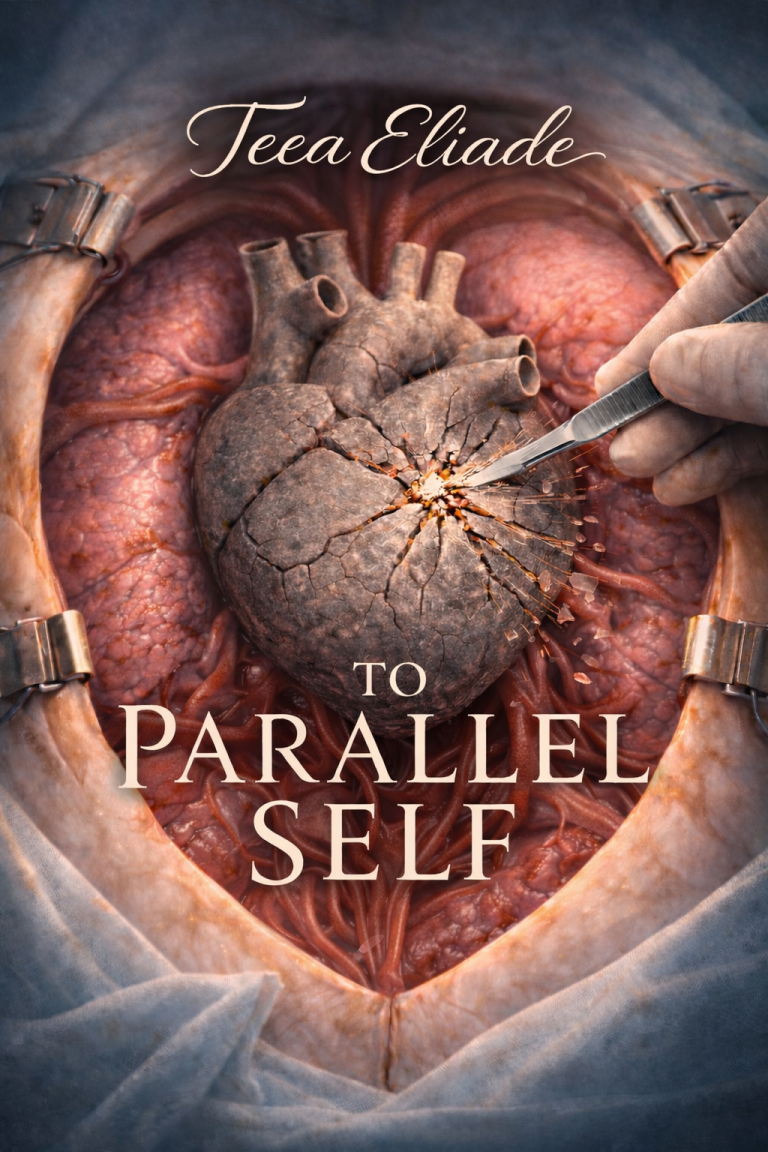
To Parallel Self is not a narrative in the traditional sense. It is an anatomical, philosophical, and emotional investigation of identity after fracture.
Structured as reports, diagnoses, letters, surgical protocols, and dated fragments, the book examines the Self as something that can split, survive, regenerate, and yet never fully reunite. The text adopts the language of medicine, psychiatry, criminology, and science only to subvert it—turning clinical observation into poetic exposure.
At its core lies the idea of the parallel self: a version of the subject that absorbs pain, love, obsession, and loss, continuing to exist beside the Ego and the Superego. Not as a metaphor alone, but as a persistent presence—monitored, dissected, anesthetized, and repeatedly reopened.
Love appears here not as salvation, but as pathology: diagnosed, measured, catalogued. Obsession becomes a biochemical event, heartbreak a surgical condition, desire an ischemic process. The body is treated as terrain—stone, metal, bone, wound—while emotions are subjected to tests, protocols, and contraindications. The tone oscillates between cold report and intimate confession, creating a deliberate tension between control and collapse.
Unlike philosophical traditions that assume insight leads to liberation, The Parallel Self questions whether integration is possible at all. Awareness does not heal. Analysis does not close wounds. The parallel self may survive every intervention, but survival itself becomes ambiguous: regeneration without relief, consciousness without reunion.
Written in fragments dated between 2016 and 2017, the book reflects a long-standing preoccupation with repetition, bodily symbolism, and the failure of rational structures to contain emotional extremity. It is a work about persistence rather than resolution—about what continues when nothing is cured.
The Parallel Self is an uncompromising exploration of identity after rupture, where the self does not disappear, but multiplies—and where living means coexisting with what cannot be removed.
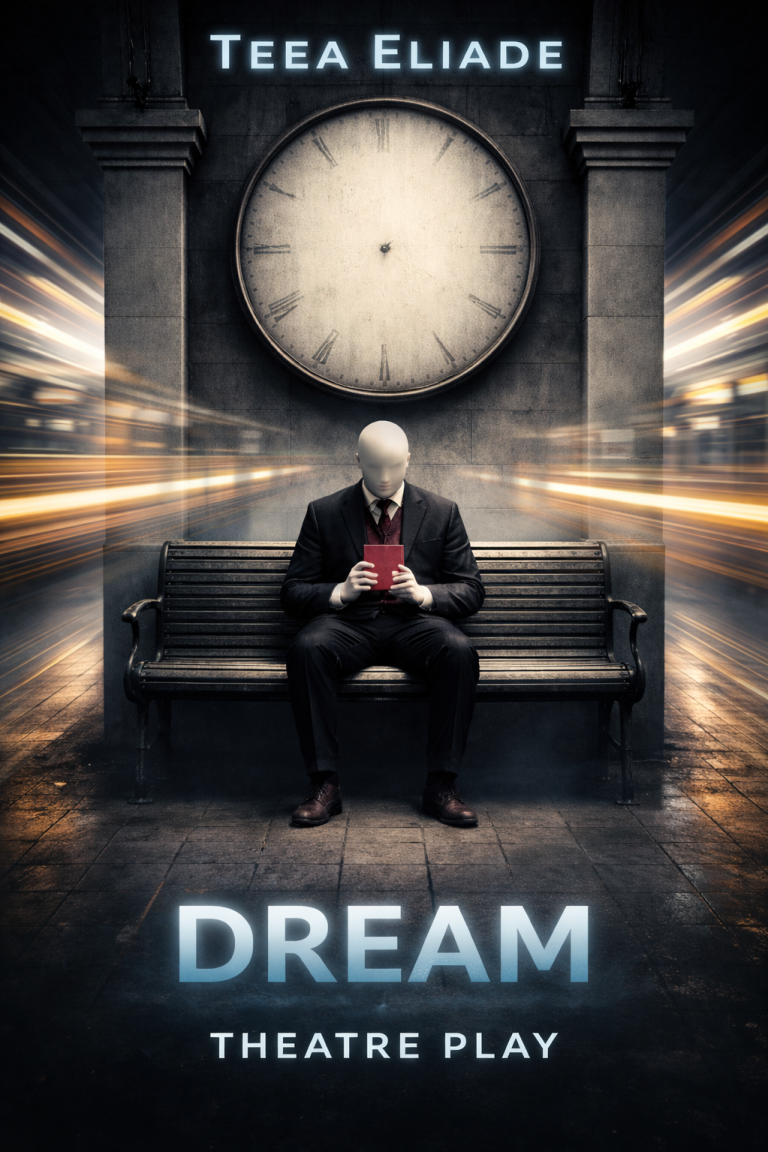
Plato famously described a group of people chained inside a cave, forced to watch shadows cast on a wall by a fire behind them. These shadows, he argued, are mistaken for reality. When one of them is freed and leaves the cave, he encounters the true world outside. Having seen the light, Plato assumes that such a person could never sincerely return to the cave, except perhaps to enlighten the others. This assumption rests on a fundamental belief: that truth, once recognised, is irreversible. That knowledge liberates by its very nature. Dream begins precisely where this belief becomes fragile: in the psyche of a human being.The play does not deny Plato’s image, nor does it parody it. Instead, it questions a premise rarely examined: the idea that humans inevitably prefer truth to structure, freedom to belonging, or insight to safety. Plato speaks from the perspective of the philosopher — a figure already inclined toward abstraction, solitude, and the discomfort of thinking against appearances. Dream asks what happens with a human being, any human being. What if the cave is not only a prison, but also a system of meaning? What if the shadows are not merely deceptions, but shared references that allow communication, recognition, and order? What if leaving the cave means not only seeing more, but losing language, roles, and the reassurance of being understood? What if the human being is not primarily a seeker of truth, but a creature of habit, fear, longing, and emotional survival? In Dream, awakening is not portrayed as a moment of triumph, but as an unstable state. Light does not arrive as salvation; it arrives as disturbance. The question is not whether freedom exists, but whether it is desirable once it ceases to resemble hope. The work is motivated by a quiet contradiction to Plato’s conclusion: that many would, in fact, return to the cave. Not because they fail to recognise truth, but because truth demands a cost they are unwilling — or unable — to pay. Freedom here is not denied; it is postponed, rationalised, reframed as illusion, dream, or madness. Dream explores this hesitation. It stages a consciousness that repeatedly approaches insight, only to retreat into interpretation, habit, or self-soothing narratives. The prison is not locked. The chains are real, yet strangely negotiable. What remains closed is the decision to accept the consequences of seeing clearly. Rather than opposing dream and reality, the play exposes how both can function as shelters. In this sense, Dream is not a rejection of Plato, but a response to him: a work that shifts the focus from enlightenment as destiny to enlightenment as burden. The play suggests that the tragedy of modern consciousness is not ignorance, but ambivalence — not blindness, but the persistent temptation to return to the shadows, even after recognising the fire.
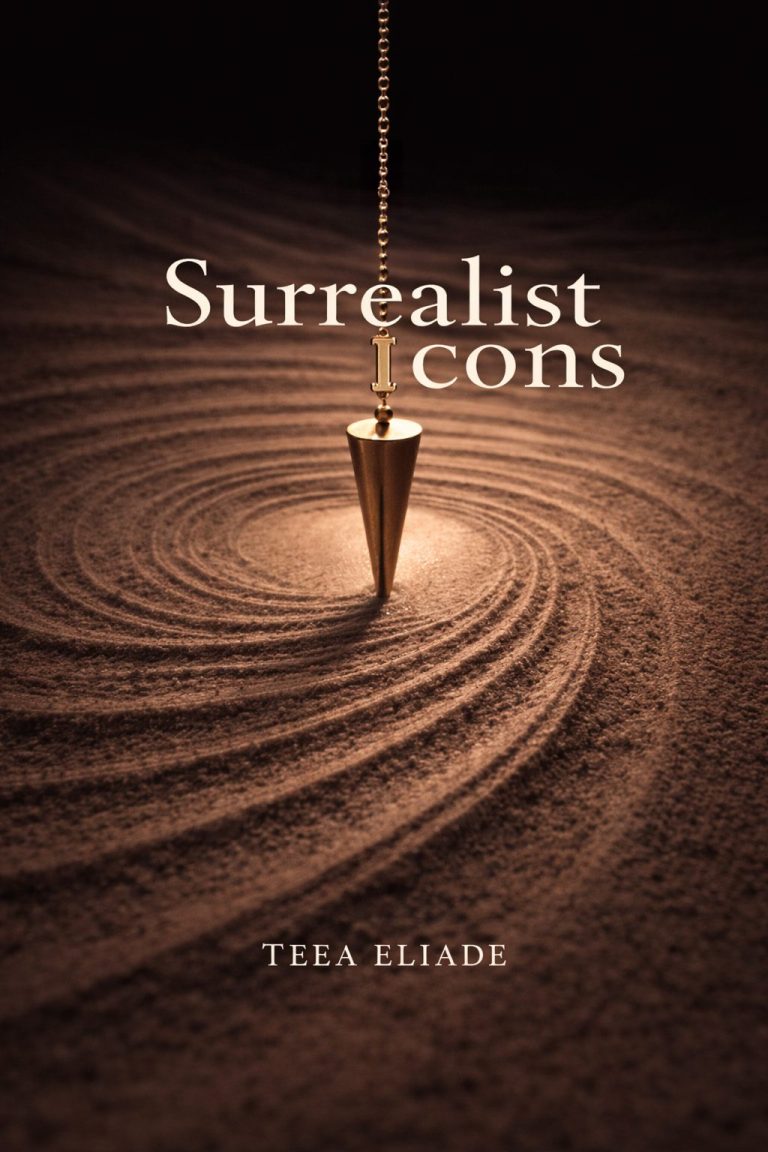
Surrealist Icons by Teea Eliade is a fragmentary literary work situated between prose, diary, and poetic invocation.
Written as a sequence of dated texts, the book traces the recurrence of love, loss, memory, and place. Cities, landscapes, rooms, and objects are not settings but vessels: they absorb emotions, preserve absences, and echo what can no longer be lived directly. Time does not progress linearly; it circles, returns, approaches meaning without ever fully touching it.
The recurring “icons” are not symbols in the religious sense, but fixed points of inner experience: moments, encounters, gestures, and places that remain unchanged while the narrator transforms around them. Love appears as proximity and separation, faith as longing without certainty, and language as an attempt to summon what resists being held.
Stylistically restrained and emotionally precise, Surrealist Icons avoids narrative resolution. Instead, it offers patterns of repetition and variation, where each text is a renewed approach toward the same center—always near, never reached.
This is a book for readers drawn to introspective literature, surrealist sensibilities, and texts that privilege atmosphere, memory, and recurrence over plot.
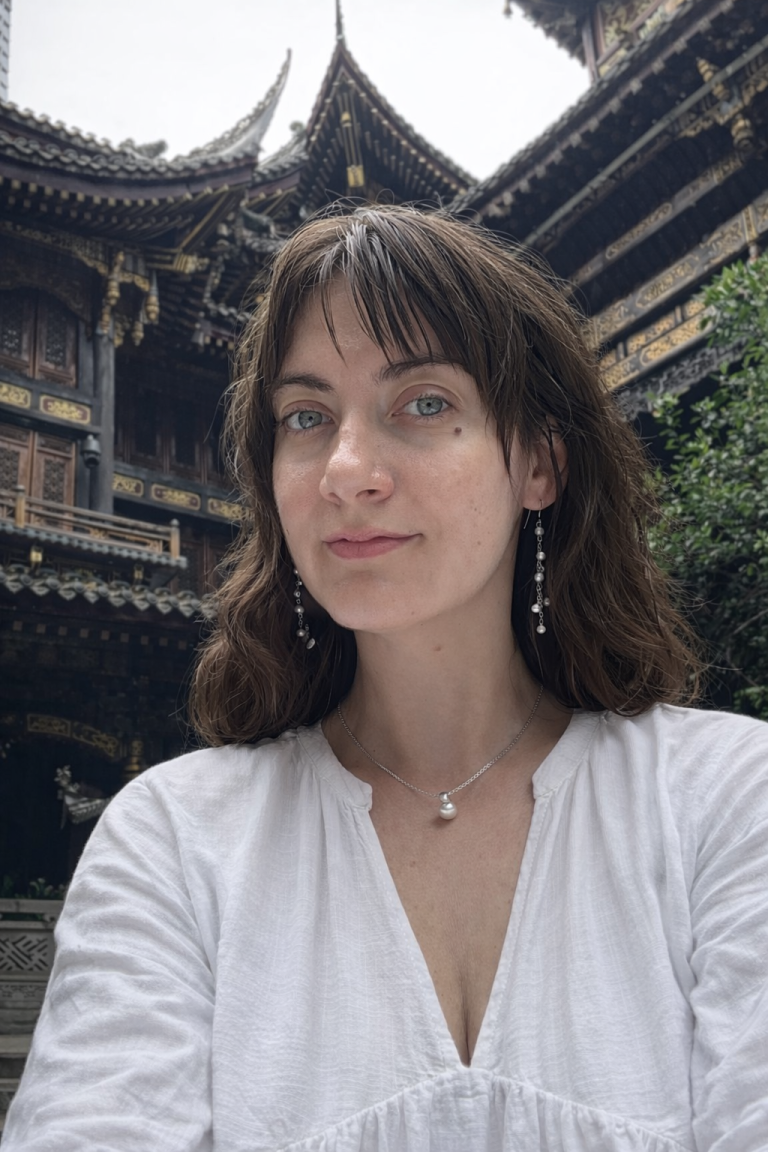
Teea Eliade is a Romanian author whose work engages with history, philosophy, psychology, language, symbols in exploring the persistence of ancient structures within modern thought.
She began writing extensively in the late 2000s, long before her work was formally published. Many of her texts matured over years of revision, reflection, and contextual research before reaching their final form. This long gestation is characteristic of her approach: ideas are not developed for immediacy, but allowed to settle, fragment, and re-emerge.
T. Eliade is a linguistically accomplished writer. Romanian is her native language; she writes fluently in English and has a strong command of French. She also possesses working knowledge of Italian and Spanish, as well as foundational knowledge of Chinese and German. Her sensitivity to language—its shifts, limits, and historical layers—plays a central role in her prose, particularly where translation, transcription, or lost meaning are concerned.
Her literary interests are deeply rooted in history. She has maintained a long-standing engagement with the figure of Vlad Țepeș and has exchanged ideas with authors and researchers working on related historical and cultural contexts. Beyond individual figures, her focus extends to the early settlement history of the Danube region and pre-Christian belief systems.
Although formally educated in law,history, engineering, Teea Eliade does not foreground this background in her literary persona. Instead, her writing approaches knowledge obliquely—through documents, journals, inscriptions, and partial accounts—allowing structure and rigor to surface implicitly rather than as declared method.
Her fiction resists genre boundaries. Mythological and historical elements are neither affirmed nor explained away; they are treated as systems that endure through repetition, reinterpretation, and silence.
Teea Eliade lives and works in Germany. She writes in English and Romanian.
Wir benötigen Ihre Zustimmung zum Laden der Übersetzungen
Wir nutzen einen Drittanbieter-Service, um den Inhalt der Website zu übersetzen, der möglicherweise Daten über Ihre Aktivitäten sammelt. Bitte überprüfen Sie die Details in der Datenschutzerklärung und akzeptieren Sie den Dienst, um die Übersetzungen zu sehen.